House Clearance High Wycombe Health and Safety Policy
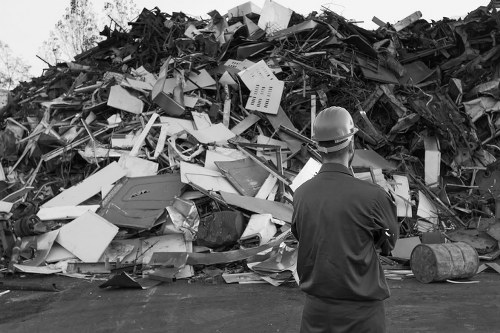 Policy statement: This Health and Safety policy sets out the commitment of our house clearance operation to protect the health, safety and welfare of employees, contractors, clients and the public. It is the responsibility of the clearance team to ensure that all waste removal and rubbish clearance activities are conducted safely, responsibly and in compliance with applicable health and safety principles. Our priority is to prevent injury and ill health while maintaining efficient, lawful waste and rubbish removal services across our service area.
Scope and purpose
This policy applies to all aspects of the house clearance and waste clearance activities carried out by our rubbish company and subcontractors. It covers domestic and commercial clearances, bulky item removal, recycling operations and temporary storage of materials. The aim is to provide clear expectations for behaviour, risk control and safe work practices during every clearance service.
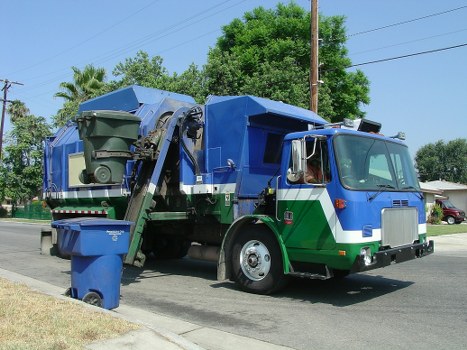 Responsibilities: Every team member must play a role in delivering safety standards. Key duties include:
- Management: implement and review the safety policy, allocate resources, and carry out periodic inspections and risk reviews.
- Supervisors: ensure safe methods of work are followed during each house clearance job and that employees have adequate instruction and supervision.
- Operatives: follow safe systems of work, use personal protective equipment (PPE), report hazards and not undertake tasks beyond their competence.
Risk assessment and control measures
All house clearance activities must be preceded by a documented risk assessment that identifies foreseeable hazards such as manual handling risks, sharps, asbestos suspicion, chemical containers, trip hazards, and biological contamination. Control measures include safe handling procedures, mechanical aids, one-person lifting limits, and exclusion of unsafe items for specialist disposal. Where risks cannot be eliminated, they must be reduced using engineering or administrative controls.
 Training and competence: Staff receive induction training, regular refresher courses and job-specific instruction on manual handling, PPE use, vehicle loading, and the identification of hazardous materials. Training records are maintained to demonstrate competence. New starters are supervised until signed off as competent to perform clearance tasks independently.
PPE and equipment: Appropriate personal protective equipment must be worn at all times during operations, including gloves, safety footwear, high-visibility clothing, eye protection and respiratory protection where dust or biohazards are present. All tools and equipment are inspected before use and taken out of service if defective. Mechanical lifting aids are used where practicable to reduce manual handling injuries in both home clearance and commercial rubbish removal jobs.
Hazardous and controlled waste
Hazardous materials encountered during a clearance — such as asbestos-containing debris, chemical drums, batteries, sharps, contaminated textiles and electronic waste — will be segregated and handled only by trained personnel following safe procedures. Items suspected of containing asbestos are not to be disturbed; an immediate stop work and specialist advice should be sought. Controlled waste is documented and transported in accordance with duty of care principles so it is transferred to licensed facilities for disposal.
 Vehicles, loading and secure transport: Vehicles used in clearance operations are maintained to ensure safe braking, load security and visibility. Loads are restrained to prevent shifting, and manual loading techniques are supervised to avoid overloading. Drivers and loaders must confirm that items are properly secured before departing a site, and that the vehicle weight is within legal limits. Routine vehicle checks and driver briefings are part of the standard operating procedures.
Incident reporting and emergency procedures: All injuries, near misses and dangerous occurrences must be reported immediately and recorded. An incident management process ensures that events are investigated, corrective actions implemented and lessons learned shared with the team. Emergency procedures for fire, serious injury, severe weather or vehicle incidents are in place and rehearsed as required.
Monitoring, review and continual improvement
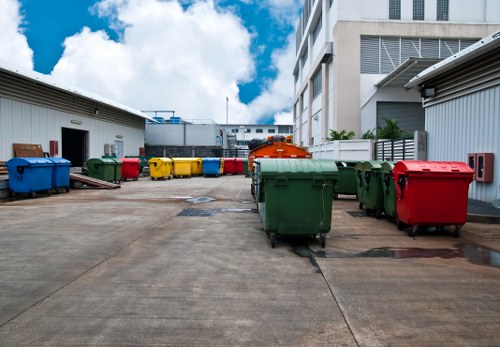 Performance monitoring: We monitor health and safety performance through site inspections, audits, training reviews and analysis of incident data. Results are used to set targets and prioritise improvements. Where practicable, we adopt safer equipment and methods to reduce reliance on manual handling and to improve safety during each clearance service.
Communication and consultation: Employees are consulted on health and safety matters and encouraged to raise concerns and suggestions. Safety briefings are held regularly to ensure that expectations for safe behaviour are reinforced and that changes to procedures are communicated in a timely way.
Policy review: This policy is reviewed periodically to reflect operational changes, new risks or industry best practice. The review ensures the policy remains effective for house clearance operations, rubbish removal and waste clearance tasks across the service area. Commitment to safety is a core component of how we operate and an essential part of delivering a professional, responsible clearance service.
