House Clearance in High Wycombe

We provide house clearance in High Wycombe for homes that need contents removed in a careful, organised way. The service is suited to full properties, individual rooms, lofts, garages and mixed household items that need sorting before removal. It is built around practical clearance work, with attention to access, item type and what should be kept, donated, recycled or taken away as waste.
For many customers, the key requirement is a straightforward service that can deal with furniture, general household items and bulky belongings without creating extra disruption. Our work is arranged around the property layout and the amount of material involved, so the clearance is handled methodically rather than as a quick sweep. Clear instructions at the outset help us understand what stays and what goes, and they also help shape the quotation.
We can also support related domestic clearance needs where they form part of a wider project, such as a loft, garage or furniture clearance. If you are comparing options, use the pages below to review the main service areas and decide what best matches your property. You can also request a quotation once you know which parts of the home need attention.
What our house clearance service covers
The main service focuses on removing household contents in a way that suits the property and the items inside it. That may include old furniture, broken or unused belongings, general bric-a-brac, white goods where appropriate, and other domestic items that have built up over time. We aim to keep the process clear and practical, especially when a property contains a mixture of usable, recyclable and disposable materials. Where the scope is larger, it can help to separate rooms or categories before work begins.
Different homes need different levels of handling. A clear-out after a move can be very different from clearing a long-occupied property, a rental between tenancies or a house with stored items in several rooms. The service can be planned around the exact areas involved, so there is no need to clear everything at once if only part of the property needs attention. When you are ready, take a moment to outline the rooms and items involved and we can build from there.
Household items, furniture and room-by-room clearance
If the clearance includes larger furniture or repeated small items, we work through the property with the aim of leaving it ready for the next stage. That might mean removing beds, wardrobes, tables, chairs, cabinets, freestanding storage or mixed domestic items from living rooms, bedrooms and dining areas. For more focused work, a room-by-room approach is often useful because it allows the useful contents to remain in place while unwanted items are taken away. If you want to narrow the work to one section, our home clearance page is a helpful place to compare a broader domestic service with a more targeted job.
Furniture and bulky item removal
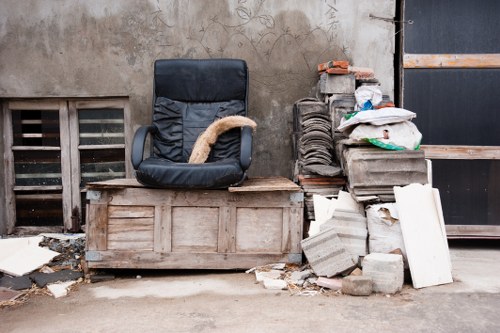
House clearances often involve items that are awkward to move, too large for ordinary household disposal or difficult to separate from surrounding belongings. This is where careful handling matters. Heavy wardrobes, sofas, beds, cabinets and similar pieces need sensible access planning and enough space to move them safely. We also consider whether items can be taken apart, carried intact or grouped by material so that the work stays efficient and controlled.
Furniture clearance is not just about lifting items out of a room. It also involves deciding what to do with pieces that may still be reusable, partially damaged or mixed with other contents. In some cases, a house clearance includes several furniture types across multiple floors, so a practical sequence can make the work easier to manage. For customers whose main concern is large domestic items rather than a full property clear-out, the furniture clearance page gives a more specific view of that service.
When furniture is only one part of the job, it is useful to list the major items first and then note any smaller pieces that should go as well. That makes it easier to shape the clearance around what matters most. If the same property also contains cupboards, loose domestic goods or heavier pieces in storage areas, the plan can be expanded so that the whole job remains consistent rather than piecemeal. Start with the biggest items and the rest can be grouped around them.
Lofts, garages and storage spaces
Many house clearances in High Wycombe involve spaces that are not used every day but slowly gather items over time. Lofts, garages and cupboards often contain a mixture of stored furniture, boxed possessions, old household materials and things that have simply been left in place. These areas can be awkward because access is narrower and the contents are not always arranged neatly. A sensible clearance plan looks at how the items are stored, how they can be removed and whether any part of the space needs to remain untouched.
The work in these areas is often shaped by the layout of the property. A loft may need careful movement through stairwells, while a garage clearance may involve heavier items mixed with tools, containers or general storage. If the space is being emptied as part of a wider clear-out, it is useful to consider what belongs in the main house clearance and what is best treated as a separate area. For garage-specific work, see our garage clearance service, which focuses on this type of storage space.
When stored items need sorting first
Stored areas can contain a mix of keepers, donations, recyclable items and things that need to go. Sorting is easier when you decide in advance which boxes or piles should stay, because that reduces unnecessary handling. This is especially helpful in lofts where access can be limited or in garages where there may be more than one category of material. For a domestic clearance that includes items from several rooms and storage spaces, a combined approach can be more efficient than tackling each area separately.
Home contents, waste removal and practical disposal
Not every clearance is a single-room job or a simple furniture collection. Some homes need mixed items removed from several areas at once, including general household waste, old furnishings and contents that are no longer needed. In those cases, the service sits somewhere between domestic clearance and waste removal, with the exact approach depending on the load and the arrangement of the property. We treat the work as a practical removal task, but with enough flexibility to handle different item types sensibly.
Where household items and waste are mixed together, the most useful starting point is to identify anything that should stay on site and anything that is ready for removal. That helps avoid confusion when rooms contain both storage and discard items. If you are comparing service types, the waste removal page is a good option for broader mixed-load information, while the home service covers the domestic side of the work in more detail. Clarity at the start makes the rest of the process simpler.
In some cases, a property may need a gradual clearance rather than a single visit. That can happen when access is restricted, when the contents are spread across floors or when the job includes a mix of light and bulky items. A measured approach allows the work to be arranged around the property instead of forcing everything into one pattern. It also gives customers a better way to decide whether they need a general household clearance or a narrower removal for specific rooms.
How we prepare a quotation

A sensible quotation for house clearance usually depends on the scale of the work, the type of items involved and how easy the property is to access. The amount of furniture, the number of rooms, whether the items are mostly small or bulky, and whether there are stairs or storage areas can all affect the time and effort involved. If the property has items that require more sorting or careful removal, that also helps shape the estimate.
To keep the process practical, it helps to give a clear description of the rooms and contents involved. A simple note of what must be removed, what should stay and whether any items are particularly large or awkward can be enough to begin. Photographs can be useful where they help show the size and spread of the work, especially for mixed contents or packed storage spaces. If your request is mainly about a particular room or furniture group, mention that as well so the quote reflects the real scope.
Factors that commonly affect the price
- The number of rooms or areas included in the clearance.
- The volume of furniture, boxes and loose household items.
- Whether items are easy to reach or need to be carried through tight access.
- Any sorting needed between keep, remove and separate piles.
- The presence of bulky pieces, storage contents or mixed materials.
When those points are clear, the quotation can be based on the actual work rather than a rough guess. That is especially useful for larger domestic clearances where the contents are varied. If you want to compare the service with a more specific page, house clearance gives the core domestic category, while the furniture and room-based pages help narrow the requirement. Send the basic details first and then add anything else that helps describe the job.
About High Wycombe

High Wycombe is a Buckinghamshire market town with a long history shaped by trade, industry and changing patterns of settlement. Its position in the Chilterns has influenced both its growth and its landscape, with surrounding hills providing a strong backdrop to the built-up centre. The town developed from an older settlement core and later expanded through coaching routes, manufacturing and suburban development, leaving a mix of historical layers visible in its streets and buildings. The parish church of All Saints stands as one of the town’s best-known historic landmarks, while the town centre combines older structures with later commercial redevelopment. High Wycombe also became closely associated with furniture making, particularly chair production, and this industrial heritage has left a lasting mark on its identity. Today the town includes a range of civic, retail and residential districts, with everyday life shaped by transport links, schools, leisure facilities and local green spaces. The Rye is one of the town’s notable open areas, offering a public landscape that sits close to the centre and contrasts with the surrounding urban streets. West Wycombe, with its historic village character and landscaped estate features, forms another important cultural reference point nearby, though it remains distinct from the town centre itself. Across the wider area, routes through the valley, older lanes and modern housing estates create a varied setting that reflects the town’s gradual growth rather than a single planned design. This combination of historic architecture, open space and long-established local character gives High Wycombe a layered identity that is still easy to read in the present-day street pattern and building styles.
Domestic clearances for changing household situations
House clearance work is often needed at times when a property is changing hands, being re-organised or reduced to fewer contents. That might involve clearing a family home after a move, dealing with long-term storage in a spare room, or removing items that are no longer needed after household downsizing. The service is designed to handle these situations in a way that keeps the process manageable and avoids leaving the customer to sort every item alone. Where the contents are mixed, the key is to keep the structure of the job simple and sensible.
We can also work with households that need a flat clearance approach when the property is smaller or arranged differently from a standard house. In practice, the same domestic principles apply, but access, floor space and the amount of furniture can change how the work is planned. For some customers, a partial clearance is all that is required; for others, the service needs to cover several rooms and storage areas. Either way, it is better to describe the exact scope clearly than to assume the same pattern suits every property.
Where appropriate, items may be separated before removal so that the final clearance is not simply a single movement of everything from the home. That can be useful when the property includes a few larger items alongside many smaller ones, or when some belongings are obviously not part of the clearance. A more deliberate approach also helps when the job needs to be kept tidy as it progresses. The result is a service that focuses on the contents of the property rather than on unnecessary disturbance.
Other related services and useful pages

Some customers start with a house clearance enquiry and then realise the work is more specific. In that case, it can help to review the pages for particular rooms or item types before deciding on the final scope. We have separate pages for lofts, garages, furniture and garden areas, which can be useful if only part of the property needs attention. If the clearance is connected to a workplace or a mixed domestic-commercial setting, there is also a dedicated option for office contents and business waste.
The service pages below are useful when the job has a clear focus. For furniture-only work, see furniture disposal. For overhead storage, compare loft clearance. For outside contents and outdoor items, the garden clearance page can help. If the work is linked to an office, the office clearance and business waste removal pages cover more specific commercial arrangements.
When you know which page best fits the job, the next step is to ask for a quotation with a short description of the items and rooms involved. If you are ready to move forward, contact us for a quote using the page that best matches your clearance needs, or simply send the details of the property and the contents you want removed. We can then respond with a practical estimate based on the information supplied.